Welcome aboard!
Let's Learn About Planes!
Hi there! My name is Adam and I LOVE planes! I made this website to share everything I know about planes with kids like you. Ready for takeoff? Let's go!
Start Exploring ✈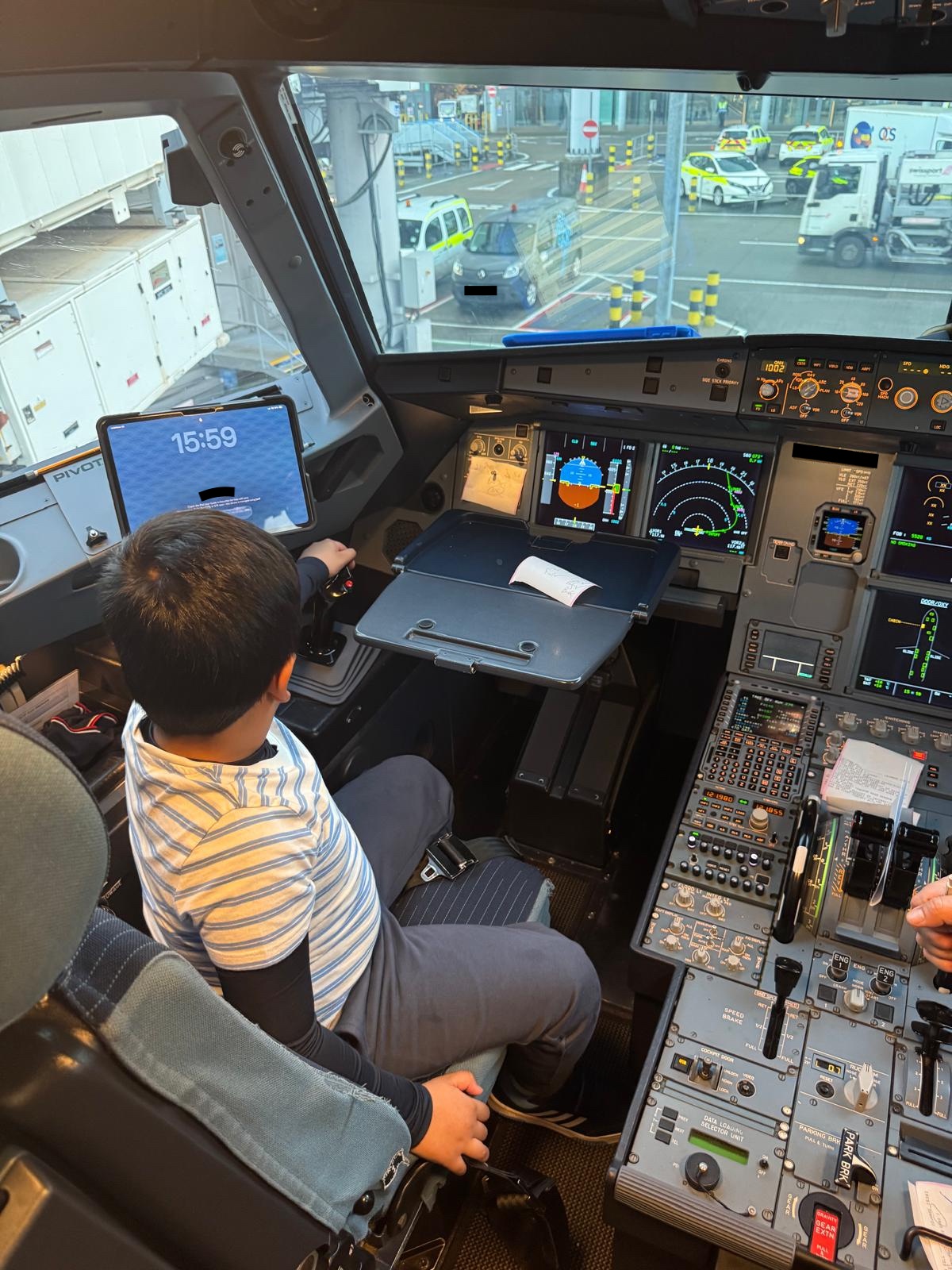
Welcome aboard!
Hi there! My name is Adam and I LOVE planes! I made this website to share everything I know about planes with kids like you. Ready for takeoff? Let's go!
Start Exploring ✈
A plane (also called an airplane or aeroplane) is a flying machine with wings that carries people and things through the sky. Planes are heavier than air, but they can fly because of the special shape of their wings and powerful engines that push them forward really fast!
Every single day, more than 100,000 flights take off around the world! Planes help people visit family far away, go on holidays, and even deliver packages and mail. Without planes, it would take weeks to cross the ocean by boat instead of just a few hours!
There are so many kinds of planes! Here are the main ones:
These are the big planes you see at the airport! They carry people from city to city and country to country. The Boeing 747 (called the "Jumbo Jet") can carry over 400 passengers! The Airbus A380 is even bigger — it has two full floors and can carry over 800 people.
Cargo planes carry packages, food, medicine, and all sorts of things instead of people. The Antonov An-225 was the biggest cargo plane ever built — it was so big it could carry a space shuttle on its back! Cargo planes make sure your toys and books get delivered.
Fighter jets are super fast military planes. The F-22 Raptor can fly at over 2,400 km/h — that's more than twice the speed of sound! They are small, quick, and can do amazing tricks in the sky like rolls and loops.
Seaplanes can land on water! They have special floats instead of wheels. People use them to reach islands and lakes where there are no runways. Some seaplanes can land on both water and land — those are called amphibious planes.
Stunt planes (called aerobatic planes) do flips, spins, and loops at air shows! They are small, light, and built super strong so pilots can do amazing tricks. Some can fly upside down for a long time!
Gliders are planes with no engine! They float on air currents, kind of like a paper airplane but much bigger. A tow plane pulls them up into the sky, and then they glide on their own. Some gliders can stay in the air for hours!
Biplanes have two sets of wings, one on top of the other! They were the very first kinds of planes people flew. The Wright Brothers' famous plane was a biplane. You can still see biplanes at air shows today.
Private jets are small, fancy planes that carry just a few people. They are fast and can land at small airports. Some are so small they only have 4 seats, while others are almost as big as a regular passenger plane!
It's not magic — it's science! Four forces keep a plane in the air:
The wings have a special curved shape. Air moves faster over the top of the wing and slower underneath. This creates a push upward called lift. Lift is what holds the plane up in the sky! The faster the plane goes, the more lift it gets.
Gravity is the force that pulls everything down to the ground. The plane, the passengers, the luggage — they all have weight. For a plane to fly, lift has to be stronger than weight. That's why plane wings are so big!
Thrust is the force that pushes the plane forward. It comes from the engines! Jet engines suck in air, heat it up, and blast it out the back really fast. Propeller planes use spinning blades to pull the plane forward. Without thrust, there's no lift!
Drag is the air pushing back against the plane, trying to slow it down — like when you stick your hand out of a car window and feel the wind pushing it back. Planes are shaped smooth and pointy to reduce drag. Thrust has to beat drag for the plane to move!
Every part of a plane has an important job. Let's learn them!
This is the long tube-shaped body of the plane where passengers sit, cargo is stored, and the cockpit is located. It's made of super strong but lightweight materials like aluminium and carbon fibre.
The wings stick out from both sides of the plane. Their special curved shape creates lift to keep the plane in the air. Fuel is also stored inside the wings! A Boeing 747's wings hold enough fuel to fill over 3,000 bathtubs.
Most big planes have jet engines hanging under the wings. They burn fuel and shoot hot air out the back to push the plane forward. A single jet engine can produce as much power as 28 racing cars!
The cockpit is at the very front of the plane where the pilots sit. It's full of buttons, screens, and controls. Modern cockpits have computers that help the pilots fly the plane safely. There are usually two pilots in every cockpit.
The tail is at the back of the plane. It has a tall vertical fin (called the vertical stabilizer) and two smaller horizontal pieces (called horizontal stabilizers). The tail keeps the plane flying straight and helps it turn.
The landing gear are the wheels underneath the plane. Big planes have many wheels — a Boeing 777 has 14 wheels! After takeoff, the wheels fold up inside the plane to reduce drag. They come back out when it's time to land.
These are movable parts on the wings. Flaps slide out to make the wings bigger for takeoff and landing. Ailerons tilt up and down to help the plane roll left and right when turning.
The rudder is the movable part on the vertical tail fin. When the pilot moves the rudder left or right, the nose of the plane turns. It works together with the ailerons to steer the plane through the sky!
Impress your friends with these awesome facts:
The SR-71 Blackbird could fly at 3,529 km/h! That's more than 3 times the speed of sound. It could fly from New York to London in less than 2 hours.
The Airbus A380 is the biggest passenger plane flying today. It's as tall as a 7-storey building and its wings are so long you could park 70 cars under them!
Every plane gets hit by lightning about once a year! But don't worry — planes are built to handle it. The electricity flows around the outside of the plane and nobody inside gets hurt.
The "black box" flight recorder isn't actually black — it's bright orange! This makes it easier to find after a crash. Every plane has two: one records the pilots' voices and the other records flight data.
Most passenger planes fly at about 10,000 to 12,000 metres high. That's higher than Mount Everest, the tallest mountain on Earth! It's so high that the temperature outside is about -55°C.
A Boeing 747 has over 6 million parts! That includes about 274 kilometres of wiring — enough to stretch across a whole city. And about half of those parts are fasteners (nuts and bolts).
The longest non-stop flight goes from Singapore to New York and takes about 18 hours and 50 minutes. That's almost a whole day on a plane! The distance is over 15,000 kilometres.
Plane tyres can hit the runway at 270 km/h and handle the weight of hundreds of tonnes. Each tyre can be used for about 500 landings before it needs to be replaced!
Those white lines planes leave in the sky are called contrails. They're actually tiny ice crystals made when hot engine exhaust meets the super cold air. They're like man-made clouds!
The two pilots on a plane always eat different meals. This is so that if one meal makes a pilot sick, the other pilot can still fly the plane safely. Smart thinking!
The longest paper airplane throw ever was 69.14 metres! That's longer than the wingspan of a Boeing 747. Maybe you can try to beat that record!
The air inside a plane cabin is really dry — drier than most deserts! That's why people get thirsty on long flights. The air is also refreshed every 2 to 3 minutes.
From the first flight to supersonic jets — it's an amazing story!
On December 17, 1903, brothers Wilbur and Orville Wright made the first powered airplane flight in Kitty Hawk, North Carolina, USA. Their plane, called the Wright Flyer, flew for only 12 seconds and covered just 37 metres — shorter than a swimming pool! But it changed the world forever.
The very first scheduled airline flight flew between St. Petersburg and Tampa in Florida, USA. The flight took 23 minutes and carried just one passenger! The ticket cost $5 — which was a lot of money back then. Today, millions of people fly every day.
Charles Lindbergh became the first person to fly solo (all alone!) across the Atlantic Ocean. He flew from New York to Paris in a plane called the Spirit of St. Louis. The flight took 33.5 hours non-stop. He didn't even have a front window — he used a periscope to see!
Amelia Earhart became the first woman to fly solo across the Atlantic Ocean! She was an amazing pilot and inspired millions of girls and women to follow their dreams. She flew through storms and ice to make her historic journey.
The Heinkel He 178 became the first jet-powered airplane to fly. Jet engines were way more powerful than propellers. This invention would eventually lead to the fast planes we have today. Jets changed flying forever!
Pilot Chuck Yeager flew the Bell X-1 faster than the speed of sound! That's over 1,235 km/h. People used to think it was impossible to fly that fast. When a plane breaks the sound barrier, it makes a loud BOOM called a sonic boom!
The Boeing 747 flew for the first time! It was the first "wide-body" plane with two aisles. It could carry hundreds of passengers and made flying affordable for regular families. The 747's upper deck hump makes it one of the most recognisable planes ever.
The Concorde started carrying passengers faster than the speed of sound! It could fly from London to New York in just 3.5 hours (normally it takes about 8 hours). It had a pointy nose that would droop down during landing so the pilots could see the runway.
The Airbus A380 had its first flight! It's a double-decker plane (two floors!) and can carry over 800 passengers. It's as heavy as 150 elephants when fully loaded but still flies gracefully through the sky.
Engineers are building electric planes that don't need fuel, supersonic jets for super fast travel, and even planes that can take off straight up like a helicopter! Who knows — maybe one day YOU will help design the next amazing plane!
First flown in 1969, the 747 changed the world. It was the first wide-body plane and made long flights cheaper so more people could fly. Its iconic "hump" on top holds the upper deck. Over 1,500 were built!
This needle-nosed beauty flew at Mach 2 (twice the speed of sound). Only 20 were ever built. It flew from 1976 to 2003 and is still one of the coolest planes ever made.
The Supermarine Spitfire was a famous fighter plane from World War II. With its beautiful elliptical wings, it was fast and nimble. Pilots loved flying it because it handled like a dream.
The fastest plane ever! This spy plane could fly at 3,529 km/h and at altitudes over 25,000 metres. It was painted black to help radiate heat because it got so hot from air friction at high speeds.
See if you can answer these questions about planes:
The Wright Brothers (Wilbur and Orville Wright) on December 17, 1903!
Lift, Weight (Gravity), Thrust, and Drag!
It's actually bright orange so it's easy to find!
The Airbus A380 — a double-decker giant!
The SR-71 Blackbird, which could fly at 3,529 km/h!
Those white lines in the sky are tiny ice crystals made when hot engine exhaust meets cold air — like man-made clouds!
Hi! I'm Adam and I am the creator and owner of this website! I love everything about planes — how they fly, how they're built, and all the cool things they can do. I made this website so kids everywhere in the world can learn about planes and love them as much as I do! I hope you had fun exploring. Maybe one day you'll become a pilot, an engineer, or even design your own plane!
Keep looking up at the sky — you never know what amazing plane you'll spot!